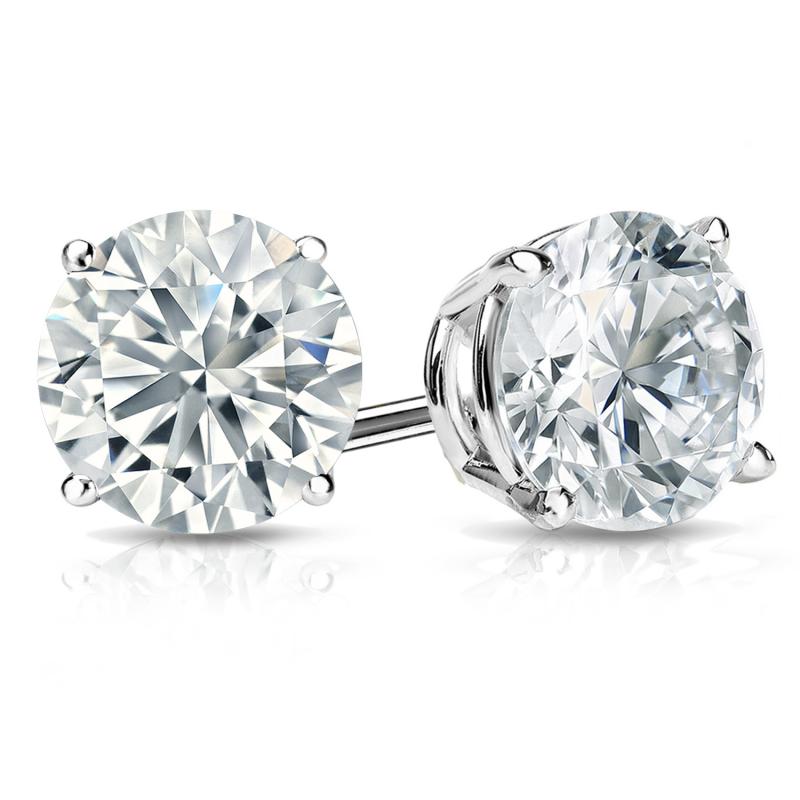
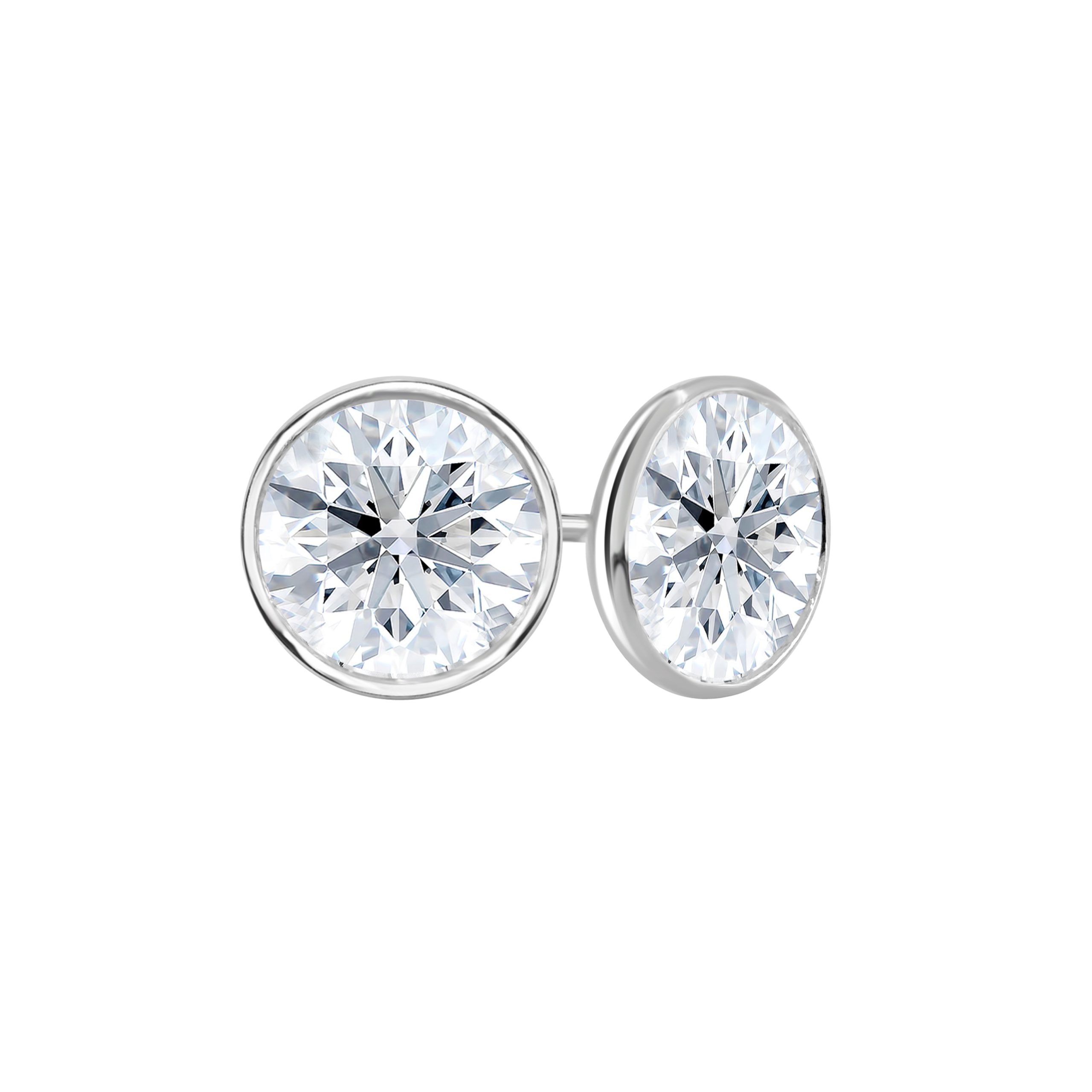
A higher diamond clarity grade does not always produce a difference you can see. When choosing stud earrings, the most useful question is whether the additional cost improves the appearance of the pair you intend to buy.
For shoppers comparing VS1 vs. VS2, both grades offer diamonds with minor inclusions. The distinction is assessed under magnification, and many stones in either category appear clean to the unaided eye. Your decision should account for the individual diamonds, their cut quality, and how well they match.
Here is what the grades mean and how to decide where clarity belongs in your budget.
Diamond clarity measures internal characteristics, known as inclusions, and surface characteristics, known as blemishes. Gemologists evaluate these features under 10× magnification.
VS stands for “Very Slightly Included.” Within this category, VS1 is the higher grade. Its inclusions are difficult for a skilled grader to identify under magnification. VS2 inclusions are somewhat easier to see, but they are still considered minor.
A clarity grade reflects several factors rather than simply the number of inclusions. Their size, location, nature, and visibility all contribute to the assessment. Two diamonds with the same grade can therefore have different inclusion patterns.
| Factor | VS1 diamonds | VS2 diamonds |
| Clarity category | Very Slightly Included | Very Slightly Included |
| Inclusions under 10× magnification | Difficult for a skilled grader to identify | Somewhat easier for a skilled grader to identify |
| Position on the clarity scale | One grade above VS2 | One grade below VS1 |
| What to evaluate before buying | Whether the higher grade provides a worthwhile benefit | Whether the individual diamond meets your expectations for appearance |
The grading distinction does not establish how noticeable the difference will be when the earrings are worn. That requires examining the actual stones.
For many buyers, the visible difference is small. GIA notes that most diamonds down to VS2 clarity do not have inclusions visible to the unaided eye. This is a useful starting point, but it is not a guarantee for every diamond.
Stud earrings are generally viewed at a conversational distance. An inclusion visible in an enlarged product image may be difficult to detect when the diamond is worn. Magnified photographs remain valuable, but they should be considered alongside videos or an assessment of the stone without magnification.
Ask whether each diamond is “eye-clean” and how the jeweler defines that description. The term refers to inclusions that cannot be seen with the unaided eye under the viewing conditions used; it is not an official GIA clarity grade.
Your own expectations matter. Some buyers are comfortable with a minor characteristic visible only on close inspection. Others prefer a higher grade even when the difference is difficult to see.
Clarity and sparkle describe different aspects of a diamond.
Cut concerns how the stone interacts with light. For standard round brilliant diamonds, GIA evaluates brightness, fire, and scintillation alongside factors related to design and craftsmanship. A higher clarity grade alone does not establish that a diamond will have a more appealing light performance.
When comparing two pairs, examine their cut quality and overall appearance before treating VS1 as the better purchase.
For example, suppose you are choosing between two pairs of natural round studs with similar measurements, color, and settings. If both pairs look clean without magnification, the higher clarity grade may offer little visible advantage. Reviewing their light performance and price can help you make a more informed choice.
DiamondStuds.com’s guide to choosing quality diamond studs provides a broader explanation of the qualities to consider together.
The VS1 vs. VS2 decision becomes more straightforward when the higher grade addresses a specific preference.
VS1 may be worth the additional cost if you prefer inclusions that are harder to identify under magnification, or if the particular VS2 stone you are considering has a characteristic you find distracting. It can also be a reasonable choice when the price difference is modest and does not require compromising on your preferred size or setting.
Shape deserves attention, too. Emerald-cut diamonds have long, open facets that can make inclusions easier to see than in some other cuts. For this shape, inspect the individual stone carefully rather than assuming that a clarity label tells the whole story.
The strongest reason to choose VS1 is that the actual diamond better meets your standards, rather than the grade being higher on paper.
VS2 can be a sensible choice when the diamonds appear clean to you and the higher grade does not provide a benefit you value.
Any difference in price may allow you to select a preferred metal, setting, or diamond size. It may also let you keep the purchase within budget without changing the appearance you want.
Compare similar options before drawing conclusions about value. Diamond origin, shape, weight, color, cut, metal, and setting should be as consistent as possible. A comparison between natural and laboratory-grown diamonds, for instance, will not isolate the effect of clarity on price.
There is no fixed percentage that accurately describes the premium for every VS1 pair. Use the prices and specifications of the earrings you are considering.
A good pair of studs should look balanced when worn. Review both diamonds rather than relying on the specification of one stone.
Ask about their individual measurements, visible color, outline, and overall appearance. Equal carat weights do not necessarily mean identical dimensions, so check the measurements alongside the listed weight.
Read quality ranges carefully as well. A listing marked “VS1–VS2” describes a range rather than guaranteeing that both diamonds have one particular grade. If exact individual grades are important to you, request that information before purchasing.
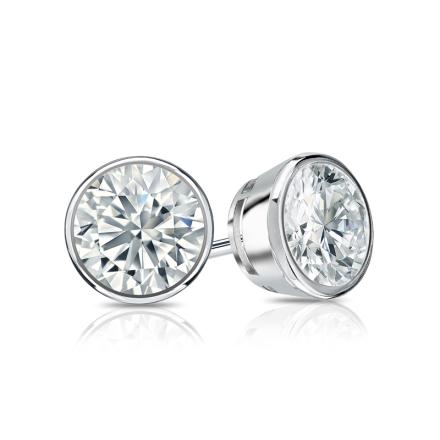
For example, DiamondStuds.com’s 1.00 total carat weight natural round studs in a 14k white gold bezel setting list a G–H color and VS1–VS2 clarity option. The design offers a practical starting point for reviewing a finished pair, while the individual stone details can be clarified with the jeweler.
If you want to review diamonds alongside their accompanying reports, explore the GIA-certified diamond stud builder. It offers choices of diamond shape, setting, and precious metal, allowing you to consider the complete design as you compare stones.
For laboratory-grown options, the IGI-certified lab-grown diamond studs collection provides another relevant place to begin. Review the selected diamonds’ individual specifications and reports before making your decision.
A considered VS1 vs. VS2 choice balances clarity with appearance, matching, and cost. If the higher grade gives you a benefit you appreciate, it can be worth paying for. If both pairs meet your expectations visually, VS2 may provide better value for your purchase.
Enter the report number into the issuing laboratory’s verification service. GIA Report Check and IGI’s online tool let you compare the document with their database records. Ask the jeweler to confirm that the report corresponds to the diamond, including checking any available laser inscription.
No. IGI laboratory-grown diamond reports provide individual clarity assessments. GIA introduced a different assessment for eligible colorless to near-colorless laboratory-grown diamonds in October 2025, using the overall descriptions Premium and Standard. Older GIA laboratory-grown reports may show individual grades, so check the report date and format.
Two pairs of diamond studs can look similar in photographs while differing in ways that…
When shopping for gold jewelry, most buyers assume the answer is simple: more gold equals…
We love wedding anniversaries. They mark the passage of time while bringing a couple's vows…
Meta Description: Find the best diamond shape for your face shape. From cushion to emerald…
Planning ahead is the key to creating great vacation looks with the perfect jewelry pairings.…
Red, white, and blue is an iconic color combination here in the United States, especially…