When shopping for gold jewelry, most buyers assume the answer is simple: more gold equals better jewelry. But purity and wearability don’t always go hand in hand, and not all gold karats are created equal when it comes to how a piece performs on the body. A 24K piece holds the highest gold content of any karat, but it may scratch before the week is out.
At Diamondstuds.com, this is probably the question we get asked most, and it deserves a straight answer.
Understanding the gold karat scale is about matching the right karat to the right piece, the right use, and the right buyer. That’s what this guide does. Let’s see what kt of gold is best.
Karat measures gold purity on a 24-part scale, and when comparing different karats, buyers most often look at 10K, 14K, 18K, and 24K. Each karat represents 1/24th pure gold in the alloy, which means 18K gold contains 75% pure gold and 25% alloy metals. In contrast, 14K gold contains 58.3% gold and 41.7% alloy metals. In jewelry, 14K and 18K are the most common karat choices. Those percentages also explain how gold alloys work: gold is mixed with other metals to improve hardness and wearability. The remaining percentage is always made up of copper, silver, and zinc, added specifically to make the gold harder and more suitable for making jewelry that holds up over time.
The relationship is consistent: more alloy metals means a harder, more durable piece. More pure gold means a richer color, a softer metal, and a higher price per gram.
Two terms worth clarifying before going further: karat and carat sound identical but mean different things. Karat measures gold purity. Carat refers to gemstone weight. They’re not interchangeable.
One more marker worth knowing: authentic gold jewelry carries a purity stamp. 14K gold is stamped 585. 18K gold is stamped 750. These small hallmarks verify karat purity, making them a straightforward sign of transparency and a quick way to confirm what you’re buying is real gold.
Another quick verification: real gold is not magnetic. If a piece pulls toward a magnet, it’s not genuine gold, a simple test that takes seconds and requires nothing more than a household magnet.
While gold can technically be alloyed to any karat level, four options account for the vast majority of fine jewelry applications. Here’s what each one means in practice.
At 41.7% pure gold, 10K has less gold than higher karats and contains the highest proportion of alloy metals of any recognized fine jewelry karat. That makes it the most scratch-resistant and structurally rigid option available, while also giving it lower intrinsic value. It is also the most affordable across the karat scale.
The tradeoff is color: lower karat gold produces a more muted, cooler yellow tone, noticeably less warm than higher karats. For buyers with a very active lifestyle or a tight budget who still want real gold, 10K is a functional choice, though it sits at the lower edge of what’s typically considered fine jewelry.
This is the most widely used precious metal standard for jewelry and is often regarded as the best overall value for everyday jewelry. At 58.3% pure gold, it delivers the warm, classic gold color most buyers expect while maintaining enough alloy content for strong scratch resistance and less bending under daily wear.
It works for engagement rings, wedding bands, everyday earrings, and pendants alike. The purity stamp reads 585. For most buyers, this is the answer: an ideal balance of quality, durability, and value that holds up over time without asking much in return.
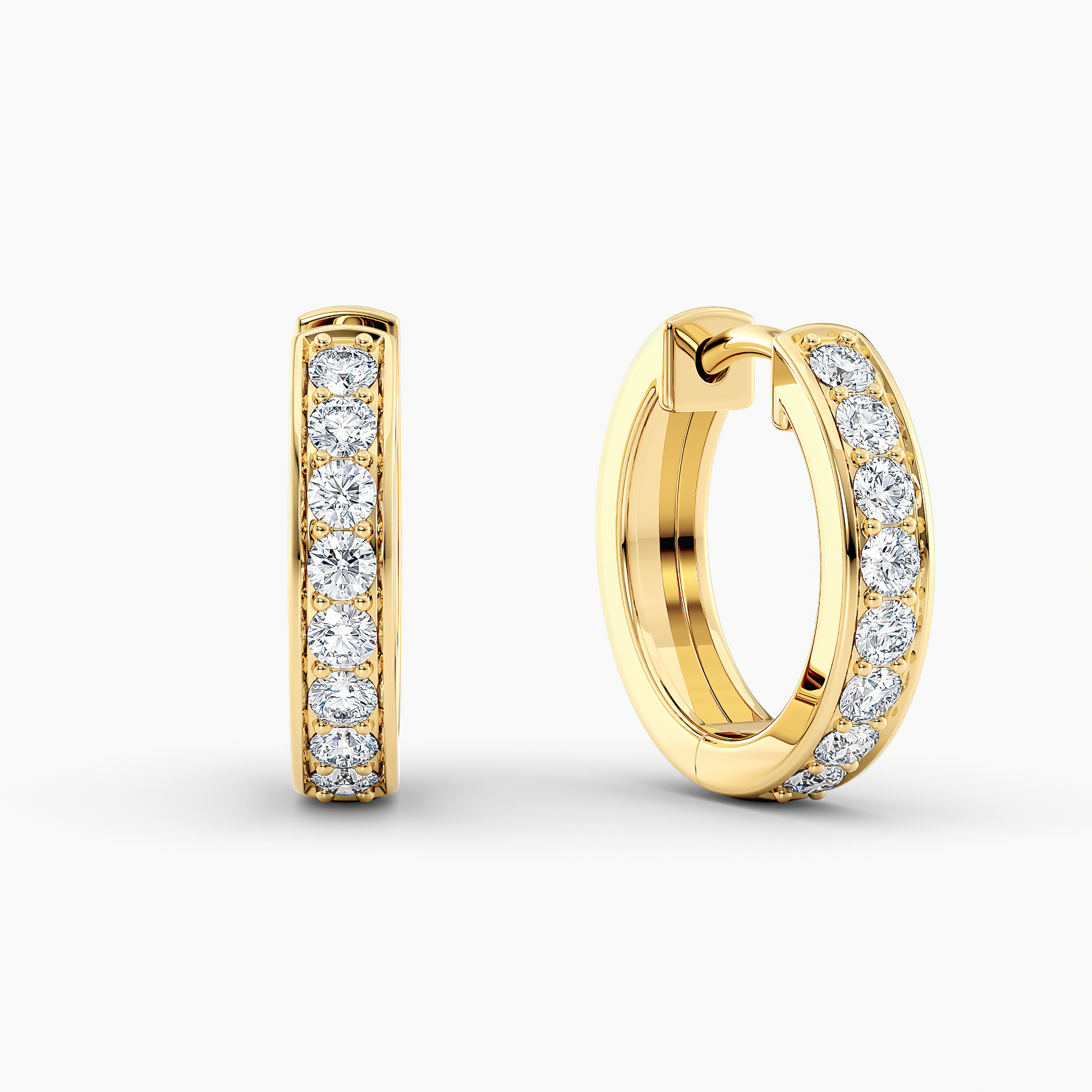
Quintessential Small Lab Grown Diamond Hoops 0.50 ct. tw. (E-F,VS) 14K Yellow Gold
With 75% pure gold and 25% alloy metals, 18K has a higher percentage of pure gold while still being durable enough for daily wear, which gives it a richer color and a more luxurious look. The color difference from 14K is visible: deeper, more saturated, and unmistakably richer in yellow gold, especially, which helps explain its timeless appeal.
Because 18K contains less alloy, it’s also a better choice for people with sensitive skin or a history of skin irritation from lower karat pieces. It is softer than 14K and more prone to scratches, so surface wear accumulates faster on rings and bracelets, but for earrings and pendants, that’s rarely a practical concern. The purity stamp reads 750.
Pure gold: 99.9%, with no alloys. At this karat level, the color is a rich yellow with an almost orange tone, unlike anything produced at lower karats; this is one reason high-purity gold is prized in traditional jewelry, but it’s extremely soft. It scratches and dents easily and cannot securely hold the prongs that keep a center diamond or other gemstone in place.
Its role in jewelry is primarily ceremonial, especially in South Asian and East Asian markets where high-karat gold carries deep cultural significance, and in investment bars and coins, where gold content is the focus and investment value is stronger than with lower-karat wearable jewelry. For everyday fine jewelry, it simply isn’t the right material.
Many buyers are surprised to learn that 18K white gold and 18K yellow gold are the same purity. The karat number doesn’t change with color. What changes is the alloy mix.
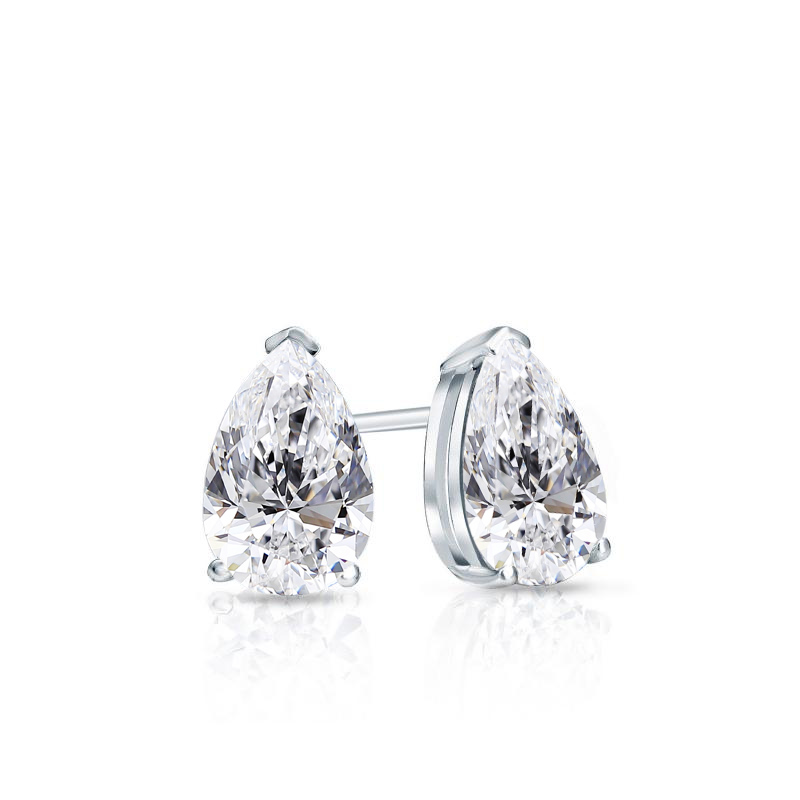
Yellow Gold Stud Earrings are typically alloyed with copper and zinc, producing their warm tone.
Rose gold gets its characteristic blush from a higher copper content, which also makes it slightly harder and more durable than yellow gold at the same karat level.
White gold is usually alloyed with silver or palladium, then finished with rhodium plating to achieve its cool, bright appearance. That rhodium plating can wear over time and may need refreshing.
This matters when comparing pieces side by side: choosing between yellow, white, and rose gold is a style decision. But the karat level underneath still determines purity, price, skin compatibility, and how the piece wears over time.
The right gold karat depends on what you’re buying and how you’ll wear it.
14K is the most practical choice here. It holds up to daily wear, maintains its color well over years of use, and performs especially well in pieces worn close to the skin every day, while still delivering the warm gold appearance most buyers want without the price premium of higher-karat gold. For pieces worn close to the skin every day, it’s the standard for good reason.
18K earns its place in a fine jewelry collection for buyers who want higher purity and a more elevated look. The deeper, more saturated color is especially visible in yellow gold settings, where the metal takes on a rich yellow look that complements a center diamond beautifully. For pieces worn less frequently, the softness tradeoff matters less, and the higher purity is gentler on skin.
Either 14K or 18K works well for a gold ring here. The choice comes down to priorities. 14K is the better option for buyers who want durable prongs and settings that hold firm over decades of daily wear. 18K is the right call for those who prioritize color and purity and are willing to have the piece polished over time.
In fact, 18K gold is often considered the best choice for engagement rings specifically, where the balance of beauty and durability matters most, even though it is softer than 14K.
Go with 22K and 24K, but with clear expectations, since these are chosen less for daily practicality and more for investment value or ceremonial use. These are not everyday jewelry. The gold content is higher, and the intrinsic value reflects that. Still, the softness makes them unsuitable for most fine jewelry applications involving stones, so people often buy high-purity gold for tradition or as an investment rather than for stone-setting performance.
The price of gold varies significantly across karat levels, but raw gold content isn’t the whole picture. Fine jewelry holds value differently than costume jewelry, which has little intrinsic precious-metal value. A 14K piece with a certified diamond is often a more complete long-term investment in wearable jewelry than a 24K piece you cannot wear.
At Diamondstuds.com, every piece is built around that principle: gold purity matters, but so does the quality of the diamond, the integrity of the setting, and the craftsmanship behind it. Higher purity matters, and so does knowing exactly what you’re buying.
For most fine jewelry (earrings, pendants, engagement rings, wedding bands), 14K and 18K gold are where quality and wearability meet. 14K offers the ideal balance of durability and value for everyday wear. 18K is the right choice when color richness and skin sensitivity are the priority. 24K is more for investment and tradition rather than for wearing.
The best karat gold is the one that fits how you’ll actually live in the piece. If you’d like help finding the right gold for a specific item in our collection, we’re happy to guide you.
We love wedding anniversaries. They mark the passage of time while bringing a couple's vows…
Meta Description: Find the best diamond shape for your face shape. From cushion to emerald…
Planning ahead is the key to creating great vacation looks with the perfect jewelry pairings.…
Red, white, and blue is an iconic color combination here in the United States, especially…
In the world of colored gemstones, three gems reign supreme: rubies, emeralds, and sapphires. This…
In the past, classic jewelry styles have always been the most popular jewelry gifts for…