






 1-855-969-7883
 info@diamondstuds.com


 Dancing Stone


 By diamondstuds diamondstuds
 Two pairs of diamond studs can look similar in photographs while differing in ways that affect their appearance and price. A diamond report helps explain those differences, giving you information to compare beyond the product description.
When researching IGI vs. GIA, start with the diamonds themselves: are they natural or laboratory-grown, and what type of report accompanies them? Both laboratories evaluate diamonds, but their current reporting formats are not identical. Understanding those formats makes it easier to choose a pair with confidence.
What Does a Diamond Report Tell You?
A diamond report records the characteristics of the stone examined by a gemological laboratory. Depending on the report type, it can identify the diamond’s origin, measurements, carat weight, color, clarity, and cutting details.
IGI, the International Gemological Institute, provides reports for both natural and laboratory-grown diamonds. Its diamond reports document origin and assess the qualities commonly known as the 4Cs: cut, color, clarity, and carat weight. The information included varies by service and diamond shape.
GIA, the Gemological Institute of America, also offers services for natural and laboratory-grown diamonds. Its natural diamond grading reports assess quality and include information such as polish, symmetry, and fluorescence. An overall GIA cut grade is provided for standard round brilliant diamonds within the D-to-Z color range.
For earrings, ask what documentation accompanies each stone. A description of the finished pair and an individual diamond report serve different purposes.
IGI vs. GIA: The Difference Between Current Report Formats
The most significant distinction for today’s shoppers concerns laboratory-grown diamonds.
IGI laboratory-grown diamond reports provide individual assessments such as a letter color grade and a clarity grade. These details help buyers compare specific stones.
On October 1, 2025, GIA introduced a different quality assessment for eligible laboratory-grown diamonds in the colorless to near-colorless range. It uses the overall descriptions Premium and Standard, based on color, clarity, and cut criteria, rather than the grading terminology used for natural diamonds. GIA offers separate services for laboratory-grown colored diamonds.
| Report or assessment | Information to expect | What buyers should consider |
| IGI natural diamond report | Origin, measurements, and individual quality assessments | Compare the actual grades and stone details |
| GIA natural diamond grading report | Individual quality grades, with an overall cut grade for qualifying round brilliant diamonds | Review the report type and the information available for that shape |
| IGI laboratory-grown diamond report | Laboratory-grown identification and individual quality grades | Useful when comparing specific color and clarity combinations |
| Current GIA laboratory-grown quality assessment | An overall Premium or Standard classification | The category is not a direct substitute for one specific color and clarity combination |
These distinctions come from the laboratories’ current descriptions of their services.
You may still encounter diamonds accompanied by older GIA laboratory-grown reports that show individual grades. Check the report date and format before making comparisons. A Premium assessment should not be treated as a direct equivalent to an IGI report showing a particular combination, such as F color and VS1 clarity.
How to Compare Reports for a Pair of Studs
A useful IGI vs. GIA comparison goes beyond the laboratory name. For earrings, the two diamonds need to work together visually.
Compare Measurements Alongside Carat Weight
Carat measures weight. The dimensions tell you more about how large a diamond may appear when viewed from the front.
For example, two round diamonds weighing 0.50 carats each might have slightly different diameters. Ask for the measurements of both stones rather than assuming equal weight guarantees an identical appearance.
Also check whether the listing shows weight per diamond or total weight for the pair. DiamondStuds.com’s stud size guide explains how carat weight, shape, and settings influence the appearance of earrings.
Assess the Pair’s Appearance
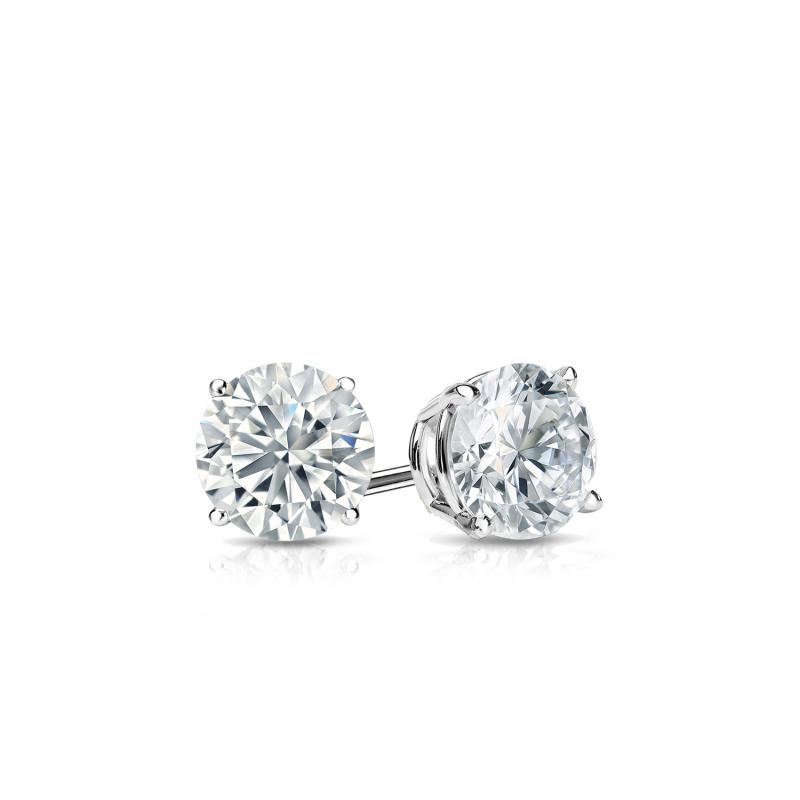
Matching grades are helpful, but photographs or videos can answer questions the numbers leave open. Look for a consistent outline, similar visible size, and a balanced appearance.
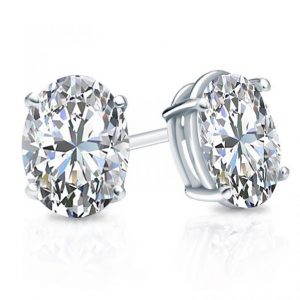
For oval, pear, emerald, and other elongated shapes, compare length and width as well as weight. A noticeably longer stone can make the pair look uneven even when the carat weights match.
Put Clarity in Context
A clarity grade describes characteristics examined under magnification. When choosing earrings, ask whether any inclusions are noticeable without magnification and whether their position affects the appearance of the stone.
Avoid choosing a higher grade automatically. Compare the visible result and the price difference before deciding where to spend your budget.
Keep the Rest of the Purchase Comparable
When comparing two pairs, hold as many features constant as possible: diamond origin, shape, measurements, quality, metal, and setting.
Otherwise, a price difference may reflect several factors at once. The laboratory name alone does not explain why one pair costs more.
Choosing Certified Studs at DiamondStuds.com
DiamondStuds.com offers a GIA-certified diamond stud builder, with options for diamond shape, setting, and precious metal. Review the selected stones and their accompanying reports before completing your pair.
For laboratory-grown options, the IGI-certified lab-grown diamond studs collection provides a relevant starting point for comparing diamonds and designing your earrings.
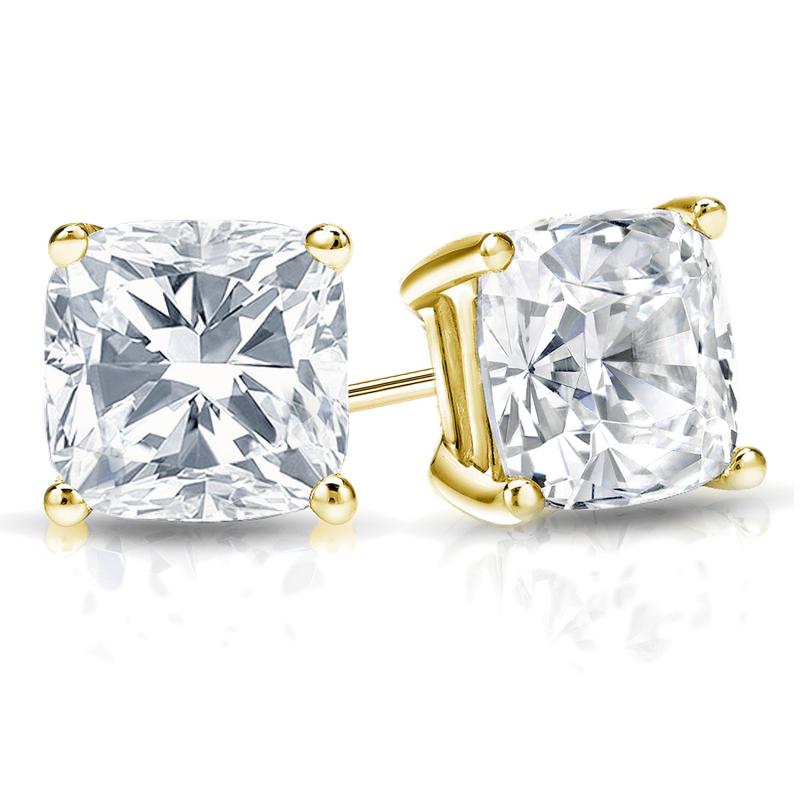
If you prefer to assess a finished design, the IGI-certified cushion-cut lab-grown studs in 14k yellow gold offer a specific example to review alongside their listed specifications. Check the current product details and availability when shopping.
The best way to approach IGI vs. GIA is to use the documentation to understand your options, then assess the earrings as a complete pair. Clear reports, well-matched stones, and a setting you enjoy wearing all deserve attention.
Frequently Asked Questions
How can I verify a diamond report?
Enter the report number into the issuing laboratory’s online verification service. GIA Report Check and IGI’s report verification tool let you compare the document with information in their databases. Verification confirms the report record; ask the jeweler to help confirm that the stone corresponds to that report.
Does every diamond have a laser inscription?
Do not assume that every diamond is inscribed. Availability depends on the laboratory and service. When inscriptions are present, a jeweler can examine them under magnification and compare them with the report number. GIA includes inscriptions with selected natural diamond services, while IGI offers its Laserscribe service.
Can a mounted diamond be assessed?
Some laboratories offer reports for finished jewelry. IGI explains that its jewelry reports assess mounted stones as the setting permits. Ask whether the documentation covers loose diamonds individually or the finished earrings, since a mounting can limit what the laboratory can examine.